The Japanese Pull Saw: Why One Thin Blade Is Replacing a Wall of Saws
It cuts on the pull stroke, leaves a surface that barely needs planing, and costs less than a decent chisel. Here is how to choose and use your first one.
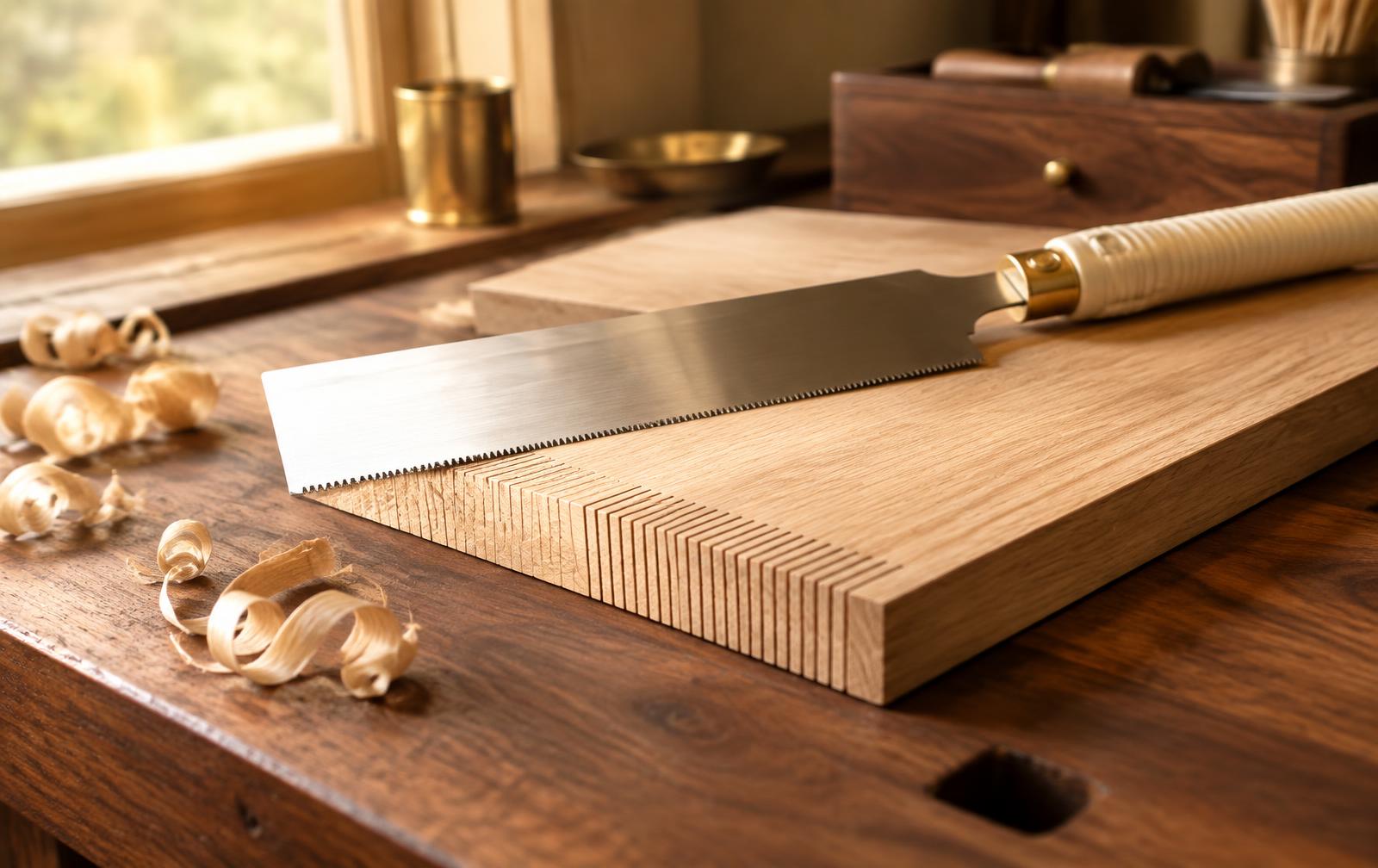
There is a quiet revolution happening on hobbyist workbenches. The heavy brass-backed Western saws that once defined a serious tool kit are being joined — and increasingly replaced — by a thin steel blade with a rattan-wrapped handle that costs less than a takeaway dinner.
The Japanese pull saw has moved from specialist curiosity to default recommendation in the space of a few years, and the reasons are practical rather than fashionable. It cuts on the pull stroke, so the blade works in tension and can be made remarkably thin. A thin blade removes less wood, needs less effort, and leaves a surface so clean that many woodworkers skip the plane entirely. For a small shop where every tool must earn its space, that combination is hard to argue with.
Why the pull stroke changes everything
A Western saw cuts on the push. To stop the blade buckling under compression, it has to be relatively thick, and a thick blade means a wide kerf, more waste, and more muscle behind every stroke. The Japanese approach inverts the logic: the blade is tensioned by the cut itself, so it can be a fraction of the thickness — often under half a millimetre.
The consequences show up immediately at the bench:
- Narrower kerfs. Less wood turned to dust, which matters when you are cutting joinery in expensive hardwood.
- Less effort. You are removing perhaps half the material per stroke, and your body notices by the twentieth cut.
- Cleaner surfaces. Hard, crosscut-pattern teeth sever fibres rather than tearing them, leaving end grain that gleams.
- Greater control. Pulling toward your centre line is a naturally stable motion, like drawing a pen toward you.
The three saws worth knowing
The Japanese saw family is large, but three types cover almost everything a weekend woodworker will ever do.
The ryoba: one saw, two edges
The ryoba is the generalist — rip teeth along one edge for cutting with the grain, crosscut teeth along the other for cutting across it. Flip the saw in your hand and you have switched functions. For a first purchase, a 240mm ryoba is the single most useful saw you can own, and it is the one most experienced woodworkers reach for daily.
The dozuki: the joinery specialist
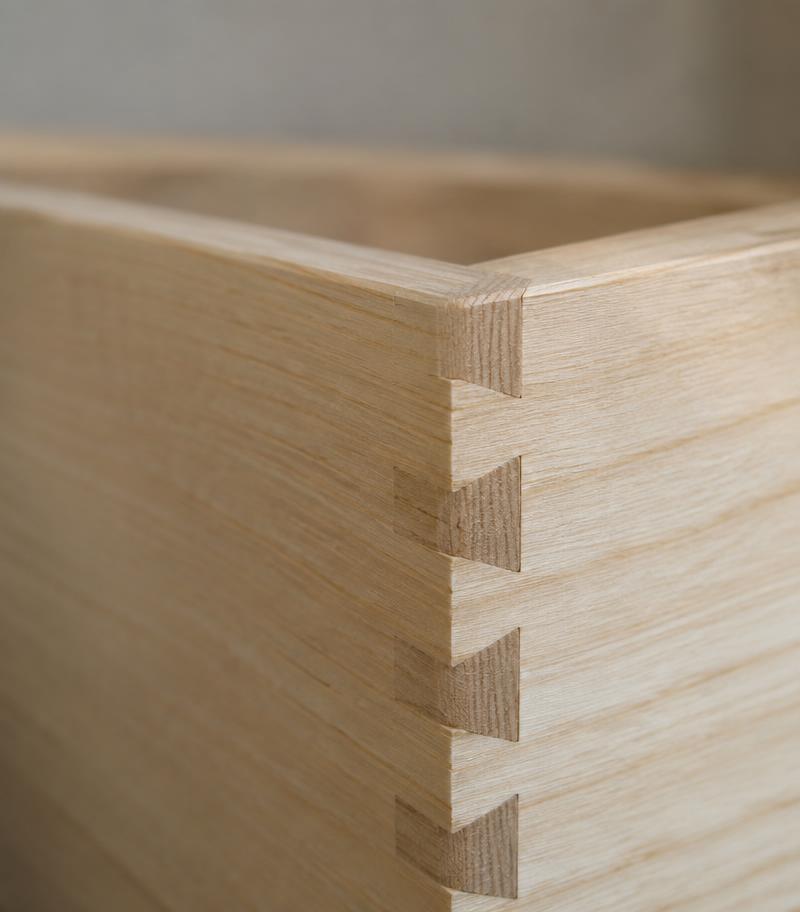
The dozuki adds a rigid spine along the back of the blade, like a Western tenon saw. That spine limits depth of cut but keeps the ultra-thin blade perfectly straight — ideal for dovetails, tenon cheeks, and any cut where the line is sacred. If you have read our piece on reading the shoulder of a dovetail, this is the saw that makes those crisp shoulders repeatable.
The kataba: the deep cutter
The kataba is a single-edged blade with no spine, free to cut as deep as the blade is wide. It is the choice for long rip cuts and resawing, where a dozuki's spine would bottom out halfway through the board.
Technique: let the saw do the work
Most beginners make the same mistake: they grip hard, push, and force the pace. A pull saw rewards the opposite temperament. Hold the handle lightly, as you would a bird. Start the cut with short, gentle strokes at the far edge of the board, using the thumb of your off hand as a fence. Once the kerf is established, lengthen your stroke and let the tool's own weight set the rhythm. If the cut wanders, you are almost certainly pushing — the blade should only ever be drawn toward you under load.
- Stand so the cut line, your shoulder, and the saw form one straight column.
- Use the whole blade, not just the middle third — it keeps tooth wear even.
- Drop the handle slightly as you finish a crosscut to protect the far corner from tearing out.
- Support offcuts so the last fibres do not split under the waste piece's weight.
What the numbers say
The thin-kerf advantage is not marginal. A typical Western tenon saw removes around 1.0 to 1.2mm per cut; a quality dozuki removes roughly 0.3 to 0.5mm. Across a chest of drawers with fifty drawer joints, that is the difference between planing every component back to the line and assembling straight off the saw. Saw sharpening services report the same pattern: owners of pull saws send blades in rarely, because hardened Japanese teeth stay keen for years — and because a replacement blade costs less than a sharpening.
That economics matters. Replaceable blades turn the saw into a permanent handle with a consumable edge, the same logic as a good marking knife. When performance drops, you swap the blade in two minutes and are back to a factory edge.
Pairing hand and machine
A pull saw does not replace every cut in a modern shop — it replaces the cuts where a machine is slow to set up. Trimming a proud tenon, cutting one dovetail, flushing a dowel: these are thirty-second hand saw jobs that would take ten minutes at a machine. For the long, repetitive dimensioning work — breaking down sheet goods, ripping stock to width — a machine still wins, and the choice of machine matters more than most buyers expect. If that decision is on your bench this season, our track saw vs. table saw guide walks through it in detail.
And for readers building out a first kit on a budget, the order of operations we recommend is simple: a ryoba first, a dozuki when joinery calls, and a considered machine only when the hand work tells you what you actually need. Retailers who specialise in this space, such as a precision cutting setup guide , have made the entry point remarkably accessible — a working precision kit now costs less than a single premium Western saw did a decade ago.
Choosing your first saw
The market ranges from disposable hardware-store blades to hand-forged heirloom tools, and the honest truth is that the middle of the range is where the value lives. Look for a ryoba around 240mm with impulse-hardened teeth and a replaceable blade from a known Japanese maker. Expect to pay between thirty and sixty pounds or dollars. Avoid the very cheapest saws, whose teeth are soft and whose blades kink; avoid the very dearest until your hands know what they want.
- Blade length: 240mm is the sweet spot; shorter saws suit fine joinery, longer saws suit carpentry.
- Tooth pitch: finer teeth for thin stock and hardwoods, coarser for thick softwood.
- Handle: traditional rattan wrap grips better than it looks and wears in beautifully.
- Replaceable blade: non-negotiable for a first saw — it halves the lifetime cost.

The bigger picture
The pull saw's rise mirrors a broader shift in the craft: away from machinery as identity and toward tools that make the work quieter, slower in the best sense, and more exact. A hand saw produces no dust cloud, no noise complaints from the other side of the fence, and no setup time — just a line, a blade, and a few calm strokes. For a workshop in a shed or a shared garage, that is not nostalgia. It is logistics.
Conclusion: the saw that teaches you
Every craft has one tool that teaches faster than the rest, and in woodworking it is increasingly this one. The pull saw forgives a beginner's strength and punishes only impatience, and it returns crisp, honest joinery in exchange for a light hand. Start with a mid-range ryoba, cut a hundred practice kerfs in scrap, and pay attention to what the blade tells you about grain direction, stance, and rhythm. The lessons transfer to every other edge tool you will ever own.
If sharpening and setup are the parts that keep letting your cuts down, working through a precision cutting setup guide is a better investment than another saw. And when the saw is tuned and you need something worth cutting, a deep library of woodworking project ideas will keep the bench busy — as will the shop itself, if you are still planning one with detailed shed and workshop plans .
Expect the trend to continue: as more woodworkers build small shops in sheds and spare rooms, tools that are quiet, compact and precise will keep winning wall space. The wall of saws is becoming a single hook — and on it hangs a very thin blade.