Small-Shop Dust Collection: The Upgrade That Outlasts Every Tool You Buy
The dust that damages your lungs is the dust you cannot see. A practical, staged plan for clean air in a one-car garage workshop.
The most consequential upgrade in a small workshop is rarely a new machine. It is the one that makes the air safe to breathe for the next thirty years of weekends.
Dust collection has quietly become the most discussed subject in home workshops, and not because woodworkers suddenly care about tidiness. The conversation has shifted to health. Wood dust is classified as a carcinogen by the International Agency for Research on Cancer, and the fraction that matters most is invisible. Coarse shavings fall to the floor within seconds. Particles below ten microns drift through a garage for hours, and the finest of them reach deep into the lungs.
For a one-car garage or a converted shed, the good news is that an effective system costs less than a decent bandsaw. The bad news is that most people buy the wrong thing first.
Suction is not the same as airflow
A shop vacuum produces high static pressure through a small opening — excellent for cleaning a floor, poor for capturing dust at a machine port. A dust collector does the opposite: it moves a large volume of air at low pressure, measured in cubic feet per minute (CFM). Woodworking machines throw dust into a fast-moving airstream, and only a large volume of moving air will catch it before it escapes into the room.
As a working guide for a small shop:
- Sanders and routers — the worst offenders for fine dust; aim for 350 CFM or more at the port.
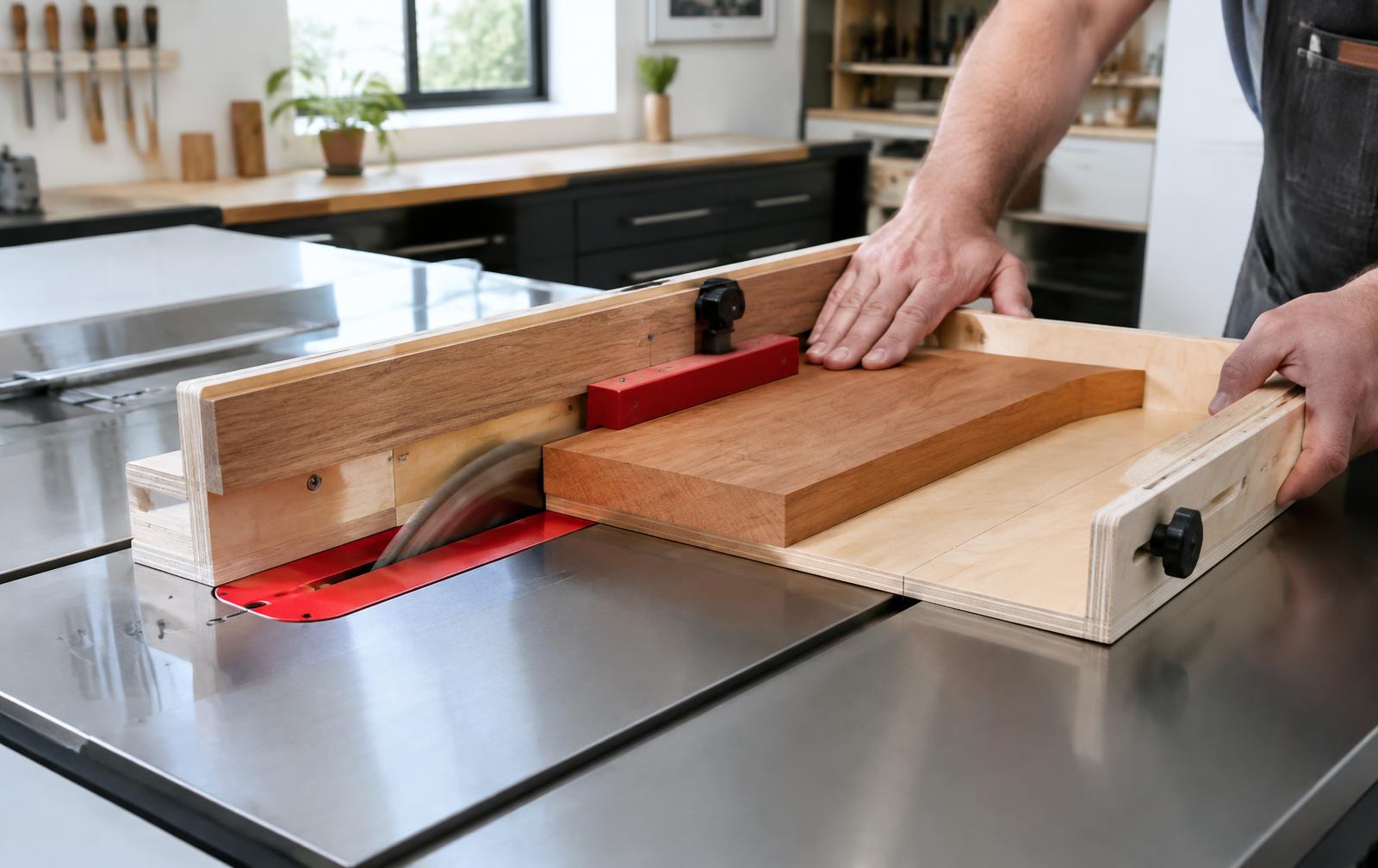
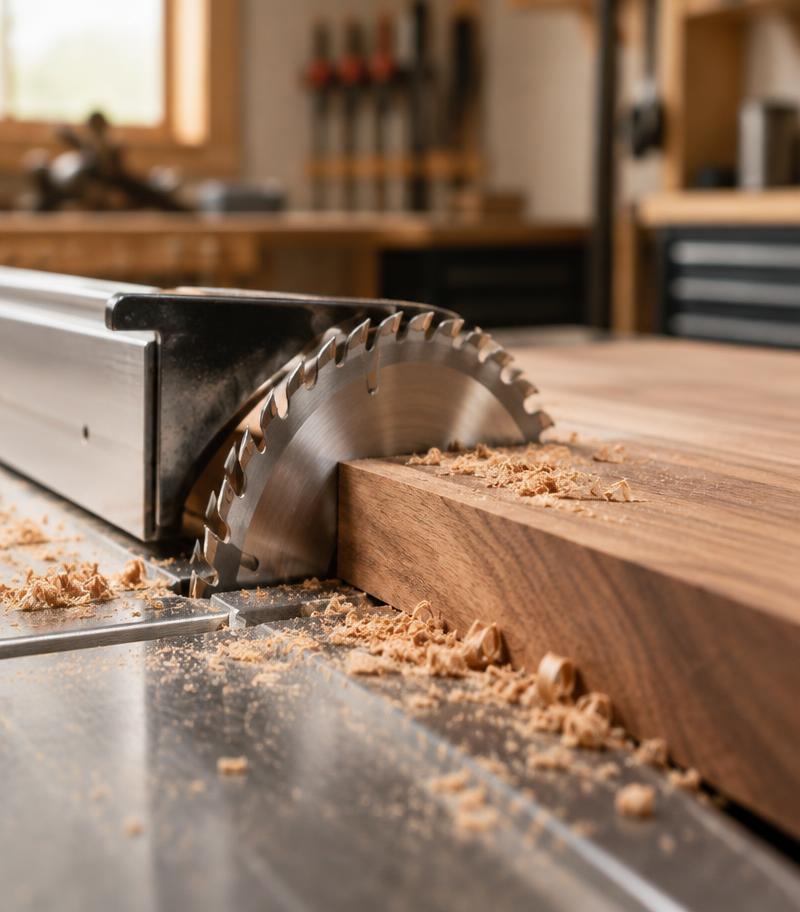
- Table saw — around 350 CFM below the table, plus overhead capture at the blade if you can manage it.
- Planers and jointers — high chip volume rather than fine dust; 400 CFM and a clear path for the chips.
- Mitre saw — the hardest machine of all to capture; a hood behind the cut does more than the built-in port.
Why cyclones took over
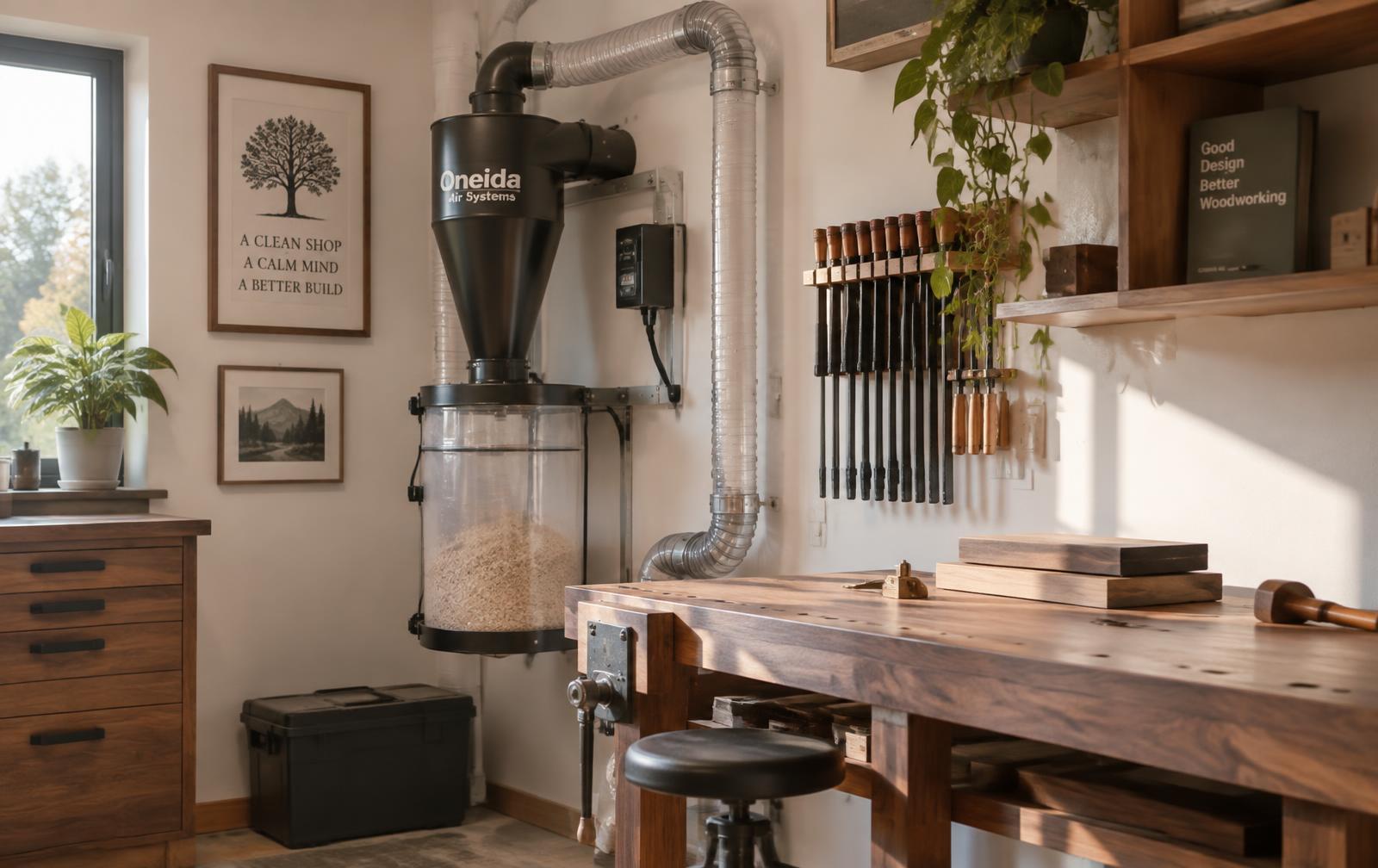
A single-stage bag collector pushes everything it captures straight into a filter. Performance is excellent for the first twenty minutes and then falls away as fine dust blinds the filter media. A cyclone spins the heavy material out into a collection bin before the air reaches the filter, so the filter stays clean and the airflow stays constant.
This is why the wall-mounted cyclone has become the default recommendation for small shops in the past few years. Prices have fallen sharply, the units occupy vertical space rather than floor space, and a HEPA-grade cartridge filter traps what the cyclone does not. If you are planning a workshop from scratch rather than retrofitting one, decide where the collector lives before you place the machines — detailed shed and workshop plans makes that easier to think through, and My Shed Plans includes layouts with the services already considered.
Ducting does most of the work
Airflow is lost to friction, and flexible hose is the worst offender — its corrugated wall can cost several times what a smooth pipe of the same diameter would. Three rules cover almost every small-shop installation.
1. Keep the main run wide
Use 100mm (4in) minimum, and 150mm (6in) for the main trunk if the collector supports it. Narrowing the pipe to fit a machine port at the very end of the run is fine; narrowing it at the start throttles the whole system.
2. Keep it short and smooth
Rigid pipe for the runs, flexible hose only for the final metre into the machine. Sweeping bends instead of tight elbows. Every sharp turn is a tax on the airflow you paid for.
3. Blast gates on every branch
A collector can only serve one machine at a time. Open gates elsewhere in the system bleed away the air you need at the cut. Close everything except the machine you are using, and make it a habit rather than a decision.
The system you will actually use is the one where switching it on takes less effort than regretting it later.
The two things a collector cannot do
Even a well-designed system misses dust, particularly at the mitre saw and during hand sanding. Two additions close the gap.
An ambient air cleaner — a filtered fan hung from the ceiling — cycles the room volume several times an hour and pulls down what escaped at the machine. Run it during the work and for half an hour afterwards, because the finest particles are still suspended long after the tools are quiet.
A fitted respirator handles the rest. A loose paper mask does very little against fine dust; a half-mask with P2 or P3 cartridges, worn against a clean-shaven seal, does a great deal. The OSHA woodworking guidance sets out the wider hazard picture, including the fire risk that comes with accumulated dust.
A staged plan on a real budget
You do not need the whole system in one weekend. Order the spend by exposure rather than by machine size.
- Stage one. A good respirator and a shop vacuum with a HEPA filter, connected to your sander.
- Stage two. A wall-mounted cyclone with a cartridge filter, serving your two dustiest machines.
- Stage three. Rigid ducting with blast gates to every fixed machine.
- Stage four. An ambient air cleaner, plus an overhead hood at the saw.
The habit matters more than the hardware. A collector that is switched on for every cut protects you more than a larger one that is awkward to reach. If your shop is short of the space that makes those habits easy, that is a layout problem before it is an equipment problem.
What this changes at the bench
Clean air changes how a workshop feels. Surfaces stay ready for finishing, tool settings stay visible, and the work does not follow you into the house on your clothes. It also protects the results: fine dust settling on a wet finish is one of the most common causes of a gritty final coat, a problem we cover in our guide to choosing between hardwax oil and polyurethane.
The future here is straightforward. Filter standards are tightening, cyclone prices keep falling, and dust extraction is increasingly designed into machines rather than bolted on afterwards. A small shop built around good airflow now will still be a pleasant place to work in a decade — which is, in the end, the whole point of building things by hand.