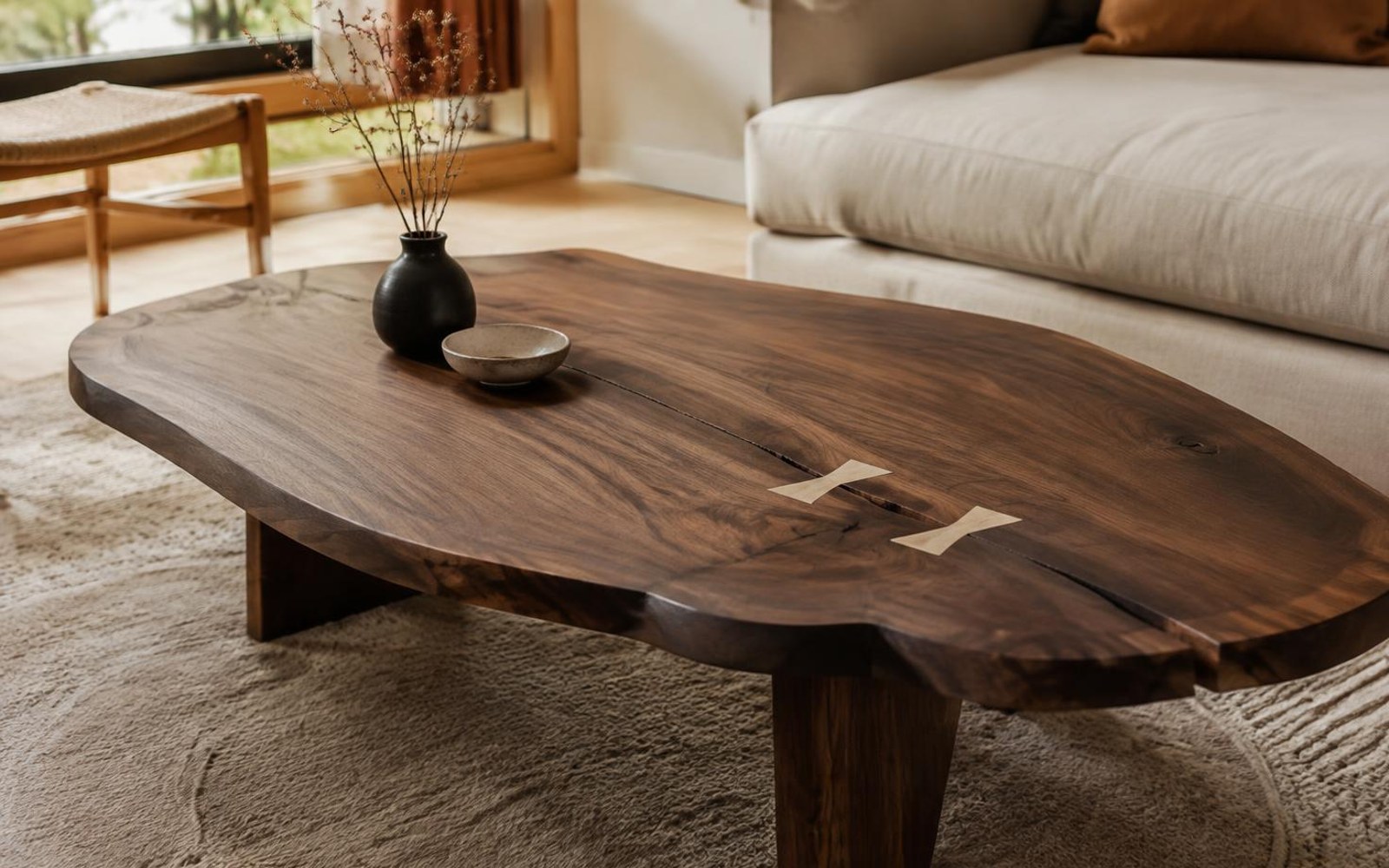
Hardwax Oil vs. Polyurethane: The Finish Debate Small Shops Are Rethinking
One soaks in and can be repaired in ten minutes. The other shrugs off a spilled glass of wine. A clear guide to choosing the right one for the piece in front of you.
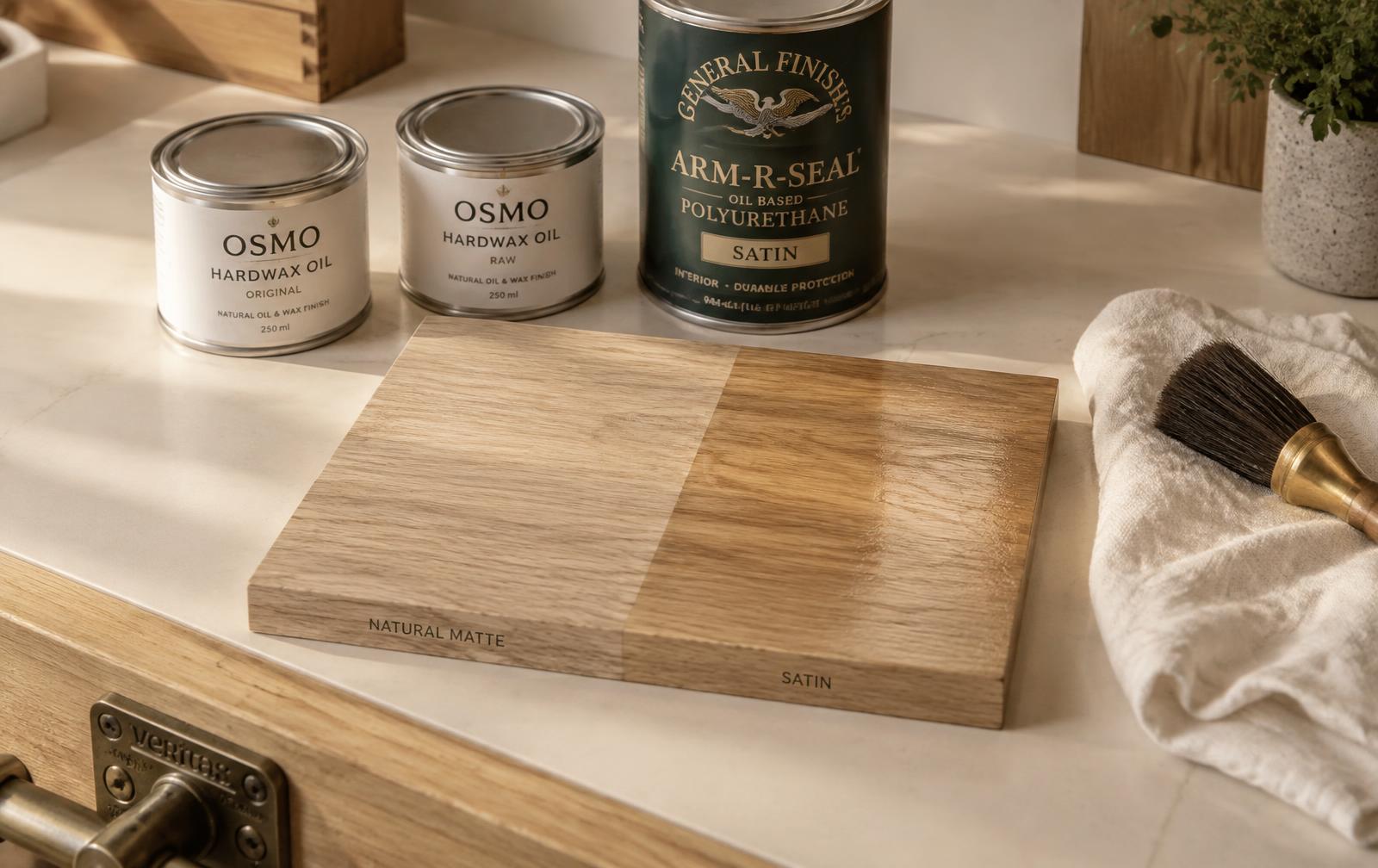
Two tins sit on most finishing shelves now, and they represent opposite philosophies. One soaks in and can be repaired in ten minutes. The other sits on top and shrugs off a spilled glass of wine. Choosing badly is the most common reason good furniture looks tired within two years.
Hardwax oil has moved from a European speciality to the default recommendation in a great many workshops, helped by flooring manufacturers, the matte look currently in demand, and a generation of makers who would rather maintain a surface than refinish it. Polyurethane, meanwhile, has not gone anywhere — because nothing else protects a heavily used horizontal surface quite as well.
How each one actually works
Hardwax oil is a blend of drying oils and waxes. The oil penetrates the fibres and cures inside the wood; the wax fills the surface and provides the sheen. There is no meaningful film on top, which is why an oiled board still feels like wood and why a scratch damages the surface locally rather than across a whole panel.
Polyurethane cures into a continuous plastic film that bridges the pores and sits above the fibres. That film is what resists water, alcohol and heat. It is also why damage is awkward: you cannot blend a repair into a film without witness lines, so the usual remedy is to sand the whole surface and recoat it.
The short comparison
- Water and alcohol resistance: polyurethane, clearly.
- Spot repair: hardwax oil, in minutes, with no witness line.
- Feel and appearance: hardwax oil, closer to bare timber.
- Application forgiveness: hardwax oil — wipe on, wipe off.
- Maintenance: oil needs refreshing; a film does not, until it fails.
- Dust and brush marks: a real risk with film finishes, almost none with oil.
Match the finish to the use, not the photograph
A dining table takes spills, hot plates and small hands. A film finish is the pragmatic answer, even if a matte oiled top looks better in a showroom. A desk, a shelf, a headboard or a cabinet carcase sees almost no liquid, and oil gives a better surface with less fuss. A bathroom vanity or a kitchen worktop around a sink needs a film, or a very disciplined maintenance habit.
Wear pattern matters as much as the liquid. Surfaces that are touched constantly — chair arms, handrails, drawer fronts — develop a pleasant patina under oil and a worn, shiny halo under polyurethane. That is an argument for oil on anything the hand meets repeatedly.
Preparation decides the outcome
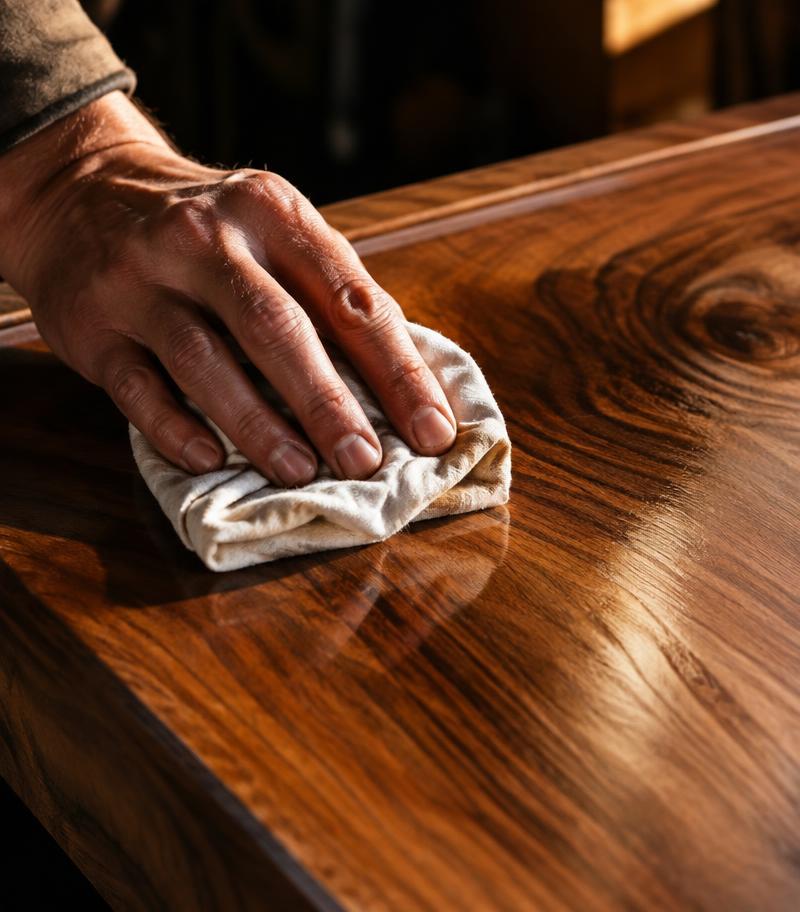
Both finishes expose preparation faults rather than hiding them. Oil deepens the colour and reveals every scratch and glue spot; a film magnifies them under gloss. Work through the grits in order without skipping, finish oil-bound surfaces at a moderate grit — around 180 to 220 — so the wood can still absorb, and inspect under raking light before opening any tin.
- Remove all glue squeeze-out before sanding; it will not take finish.
- Vacuum, then wipe with a lightly dampened cloth to raise remaining scratches.
- Break sharp edges very slightly so the finish does not fail at the corner.
- Test on an offcut of the same board — species and figure change everything.
Applying hardwax oil
Flood a small area thinly, work it in, then wipe the surface dry with a clean cloth. The temptation is to leave more product on for more protection; the result is a sticky film that never fully cures. Two thin coats, several hours apart, is the standard. Lay used cloths out flat to dry or immerse them in water — oil-soaked rags can self-heat, and this is a genuine, documented fire risk rather than a cautionary tale.
Applying polyurethane
Thin coats again, applied in a dust-free space at a stable temperature, with a light de-nib between coats. Three coats is typical for a table. Wipe-on formulations are much more forgiving than brushing for anyone without a spray setup, at the cost of extra coats.
A finish is a maintenance decision disguised as an aesthetic one.
Living with each choice
An oiled dining table realistically wants a refresh once a year — a wipe of oil over the whole top, twenty minutes of work, no sanding. A polyurethane table wants nothing at all for years, then a full sand and recoat when the film finally wears through at the edges. Which of those two patterns fits your household is a better question than which finish is technically superior.
Hybrid approaches exist and are underrated: a film finish on the tabletop, oil on the base and legs, so the surface that takes the punishment is protected while the parts you touch feel like wood. The same logic works on cabinets, with oiled carcases and a filmed top.
Health, ventilation and disposal
Ventilate the space for both products, wear gloves, and read the safety data sheet rather than the marketing copy — "natural" oils still contain solvents and driers. Dispose of rags as above, and keep finishing away from dust-generating work so airborne particles do not settle into a curing surface.
The outlook, and what to build next
Expect the middle ground to grow: water-based hybrids and oil-modified products that offer film-level resistance with a matte, in-the-wood look are improving quickly, and low-VOC regulation is pushing development that way. For now the honest advice is unchanged — choose by use, prepare properly, and test on scrap.
If you want pieces worth finishing this carefully, a deep library of woodworking project ideas is a good place to pick the next one. Crisp, well-fitted parts make any finish look better, so a precision cutting setup guide is worth a read if joints are closing with gaps, and detailed shed and workshop plans solves the other half of the problem: a clean, dust-free space to finish in.
For the underlying principle — reading how a piece will be used before choosing how to protect it — our earlier piece on oil, wax, or nothing at all sets out the same argument at the bench, and reading the shoulder of a dovetail covers the joinery that finishing will either flatter or expose.